
Start with your need
You want plastic sheeting that gives the right light for plants and lasts under local stress. Pick a film that matches crop stage, climate, and structure; otherwise you pay twice—once for purchase, once for failure. If you are sourcing materials, consult a reliable greenhouse film supplier early so specifications are realistic for your site.
Experience, anchor and credibility
I have advised growers and reviewed film performance across seasons, including field trials in Almería, Spain—a major, well-documented intensive greenhouse region. That practical exposure, combined with lab comparisons and supplier data, shapes sound choices. For manufacturer options and technical datasheets, see respected agricultural film manufacturers who publish UV and light-transmission figures you can verify.
How thickness changes performance
Thickness controls strength, puncture resistance and service life. Typical ranges: 100–150 microns (0.10–0.15 mm) for short-term or double-layer inflation houses; 150–200 microns for general-purpose single-layer use; 200–300+ microns for heavy-wind zones or long-term installations. Thicker film resists tears and lasts longer but costs more and can be stiffer to handle. Choose based on expected wind, mechanical contact and replacement cadence.

What light transmission numbers mean
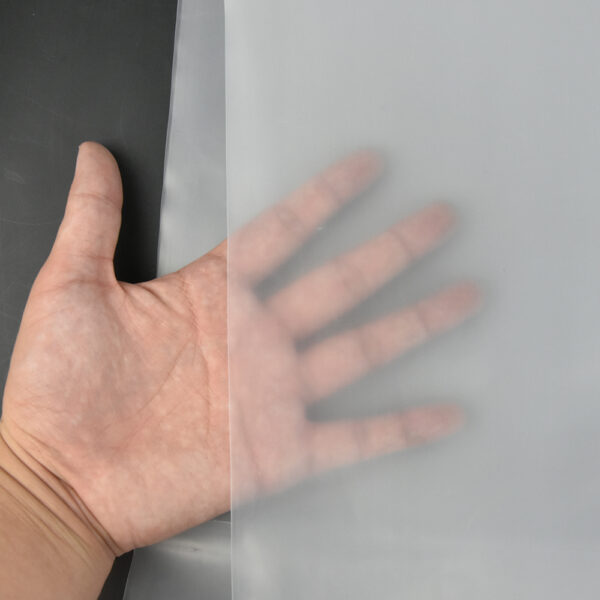
Clear polyethylene films usually transmit about 85–92% of visible light when new; diffusion additives lower peak transmission to roughly 70–85% but distribute light more evenly. UV-stabilized films sacrifice a few percentage points of transmission to avoid degradation. If you need maximum PAR at canopy level, prefer high-transmission clear films; if you want even light and fewer hot spots, choose a diffusive film with slightly lower peak transmission.
Match film to crop and stage
Seedlings and ornamentals: use high-transmission, thinner films (around 100–150 microns) for strong light and faster growth. Leafy greens and early-stage vegetables: favor clear films with good transmission and moderate diffusion. Fruiting crops and tall plants: consider thicker films (150–250 microns) with diffusion to prevent sunburn and improve fruit set. For regions with hail or frequent abrasion, choose reinforced or multi-layer options above 200 microns.
Common mistakes and how to avoid them
Buying the cheapest, thinnest film is the usual error. It tears, lets in UV damage and needs replacement quickly. Ignoring UV-stabilizer ratings and warranty terms is another. Do not confuse nominal thickness with effective performance—lab PAR transmission and UV retention curves matter more. Also watch installation: poor tensioning and wrong fasteners create failure points even for thick films.
Alternatives and trade-offs
Rigid options like twin-wall polycarbonate give longer life and better insulation but cost more upfront and change light quality. Diffusive coatings improve uniformity but reduce peak PAR. Double-inflated polyethylene tunnels add insulation for cool nights but need a blower and maintenance. Choose the option that aligns with crop value, labor capacity and replacement budget.
Practical summary
Decide by asking three questions: what light does the crop need, what stresses will the film face, and how often will you replace it? Balance higher transmission for growth with sufficient thickness for durability. When specifications and on-the-ground reality align, material choice becomes a predictable cost, not a gamble—many growers who compare datasheets and supplier track records end up preferring proven lines from HGDN because the technical numbers match field results.
 Admin