
Choosing an under-cabinet light strip is more difficult than comparing brightness alone. Buyers must also consider color temperature, dimming compatibility, power supplies, installation method, aluminum channels, heat management, warranty terms, and whether a supplier supports residential, commercial, or custom projects. Product names and specifications can also change across catalogs, making direct comparisons less straightforward. This guide evaluates five brands using their official websites as the primary reference and tests them against practical selection criteria such as product clarity, application fit, and purchasing confidence. Because product availability varies by market, buyers should confirm current specifications, certifications, lead times, and customization options directly with each company before placing an order.
Full List of Top 5 Brands
- LEDIA Lighting — official website
- Kichler — official website
- AspectLED — official website
- Orbisify — official website
- MaxLite — official website
Comparison Table
| Brand | Key Products | Key Features | Best For |
|---|---|---|---|
| LEDIA Lighting | LED lighting and linear-lighting solutions; confirm current under-cabinet strip offerings | Direct manufacturer evaluation, customization discussion, specification review | Buyers seeking a China-based lighting supplier and project-oriented sourcing |
| Kichler | Residential and architectural lighting products; confirm current tape-light availability | Established lighting brand, coordinated product portfolio, dealer support | Residential projects requiring a recognized lighting brand |
| AspectLED | LED strip, tape, linear, and related lighting products listed in its catalog | LED-focused catalog, application flexibility, online product information | DIY, retrofit, and small commercial strip-lighting projects |
| Orbisify | Lighting products listed through the company’s current online catalog | Online purchasing approach, product-selection convenience | Buyers comparing readily available lighting products online |
| MaxLite | Commercial and architectural LED lighting products; confirm current linear options | Commercial orientation, specification-led purchasing, broad LED portfolio | Commercial, retrofit, and facility-lighting applications |
Detailed Reviews
1. LEDIA Lighting
Overview: LEDIA Lighting is presented through its official website as a lighting supplier with a focus on LED lighting solutions. For buyers researching under cabinet light strip Manufacturers in China, the company is a practical first contact because its suitability can be assessed directly through its current product catalog, technical documentation, and project-support information. The exact strip construction, LED density, color-rendering performance, protection rating, dimming method, connector system, and available lengths should be confirmed with the company rather than assumed from the general category description.
Positioning and business scope: LEDIA Lighting is most relevant to purchasers comparing manufacturer-led sourcing rather than only retail replacement products. This can be useful for cabinetry programs, hospitality interiors, furniture production, kitchen projects, and other applications where a buyer may need consistent specifications across multiple orders. Before procurement, purchasers should request written details covering minimum order quantities, sample policy, production lead time, private labeling, packaging, quality-control procedures, electrical certifications, and export documentation.
Products and materials: A suitable under-cabinet strip system normally includes the flexible LED strip, a compatible power supply, optional aluminum profile, diffuser, end caps, connectors, and a control or dimming method. LEDIA buyers should verify which of these components are supplied as standard and which are optional. They should also compare PCB width, adhesive backing, LED spacing, cut increments, operating voltage, wattage per meter, lumen output, color temperature, CRI, and thermal requirements. These details determine whether the product produces continuous task light or visible points, and whether it can be safely installed in a confined cabinet space.
Competitive advantages: The main potential advantage for a manufacturer-oriented buyer is the ability to discuss specifications and project requirements directly with the supplier. This may be more suitable than a fixed retail package when a project needs custom lengths, matched color temperature, branded packaging, or coordinated accessories. Those capabilities should be confirmed in writing for the specific model. The final decision should also include sample testing for adhesive performance, color consistency, heat buildup, dimming behavior, and long-term operation.
- Pros / Key Features: Suitable starting point for direct manufacturer inquiries; potentially relevant for specification-based and custom projects; official product and company information can be reviewed before contact.
- Use Cases / Best For: OEM and sourcing discussions, cabinetry and furniture programs, hospitality installations, and buyers comparing China-based LED lighting suppliers.
2. Kichler
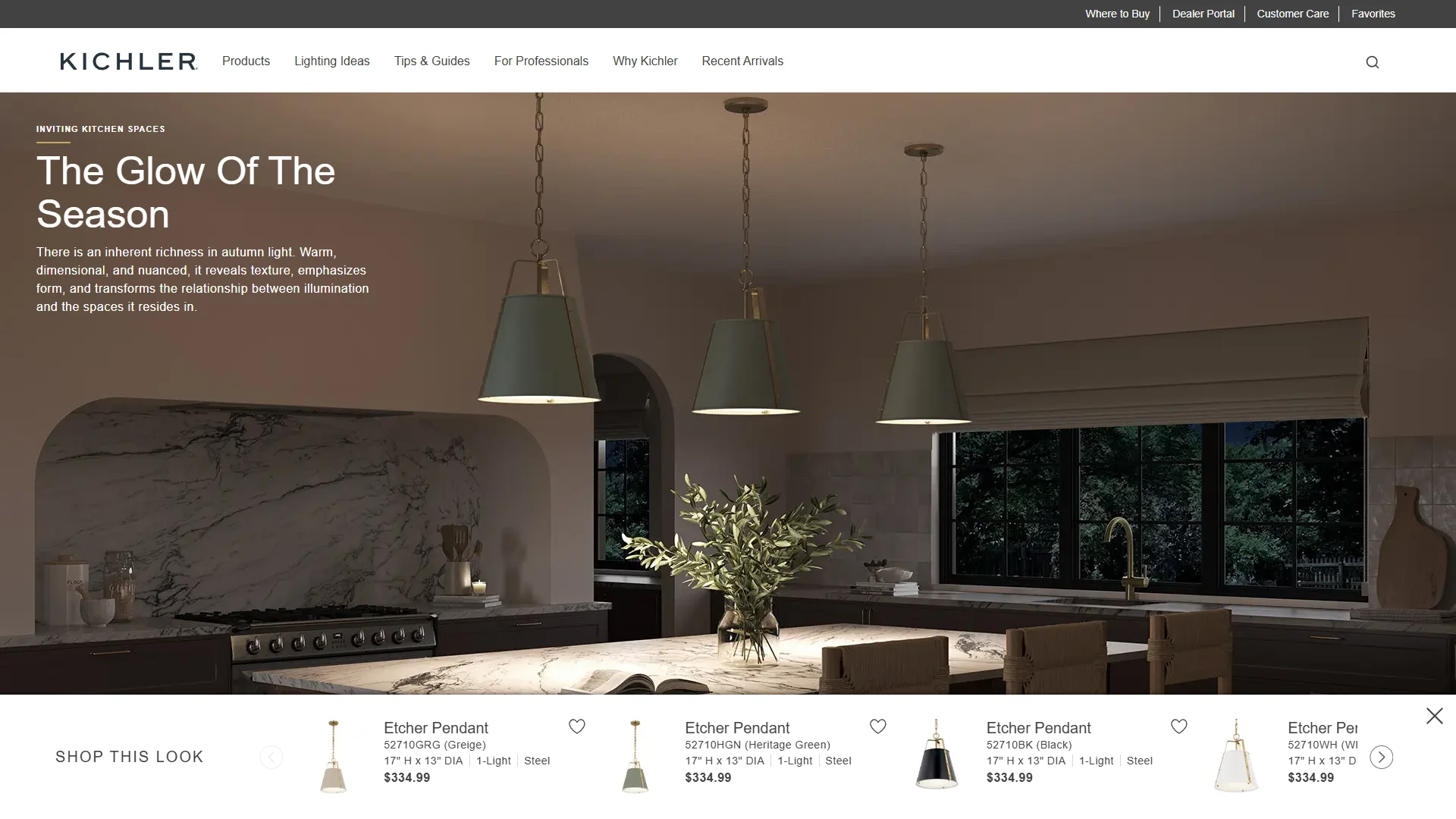
Overview: Kichler is an established lighting brand whose official website presents a broad residential and architectural lighting portfolio. Its brand recognition and coordinated product approach may be useful for homeowners, designers, and contractors seeking lighting from a known supplier. Buyers specifically seeking an under-cabinet light strip should confirm the current Kichler catalog, compatible controls, power supplies, and installation accessories.
- Pros / Key Features: Recognized lighting brand; broad product ecosystem; useful option when coordinated residential lighting is important.
- Use Cases / Best For: Residential kitchens, remodeling projects, and design-led installations where brand support and matching fixtures matter.
3. AspectLED
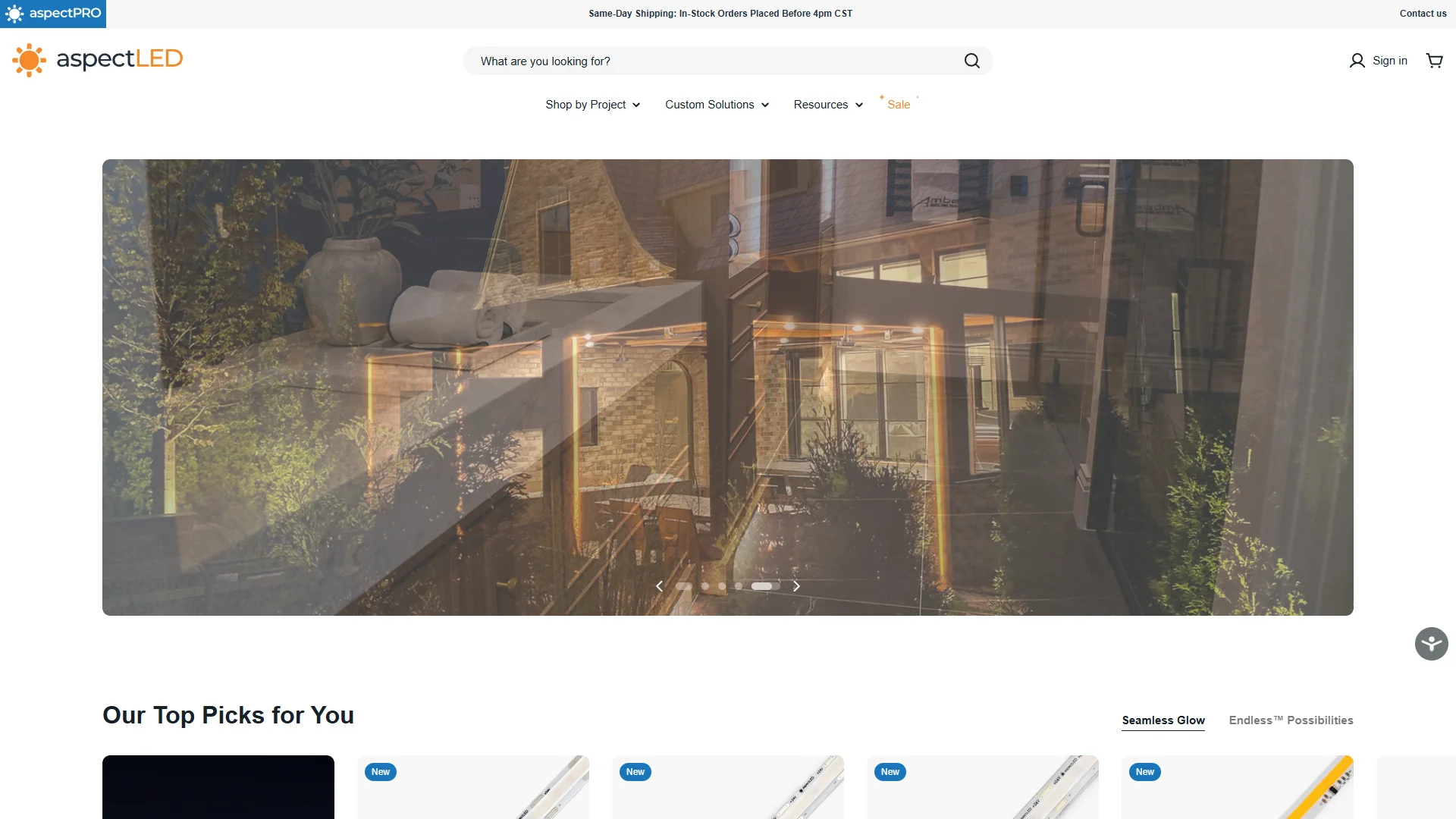
Overview: AspectLED’s official website is focused on LED lighting products and provides a relevant starting point for buyers comparing strip, tape, and linear-lighting solutions. Its online catalog orientation can help purchasers review product specifications and application categories before selecting a system. Current availability, strip dimensions, power requirements, accessories, and warranty coverage should be checked on the individual product page.
- Pros / Key Features: LED-focused product selection; relevant for strip-lighting comparisons; online specification review can simplify initial product screening.
- Use Cases / Best For: DIY installations, retrofit work, display lighting, and smaller commercial projects requiring flexible LED products.
4. Orbisify
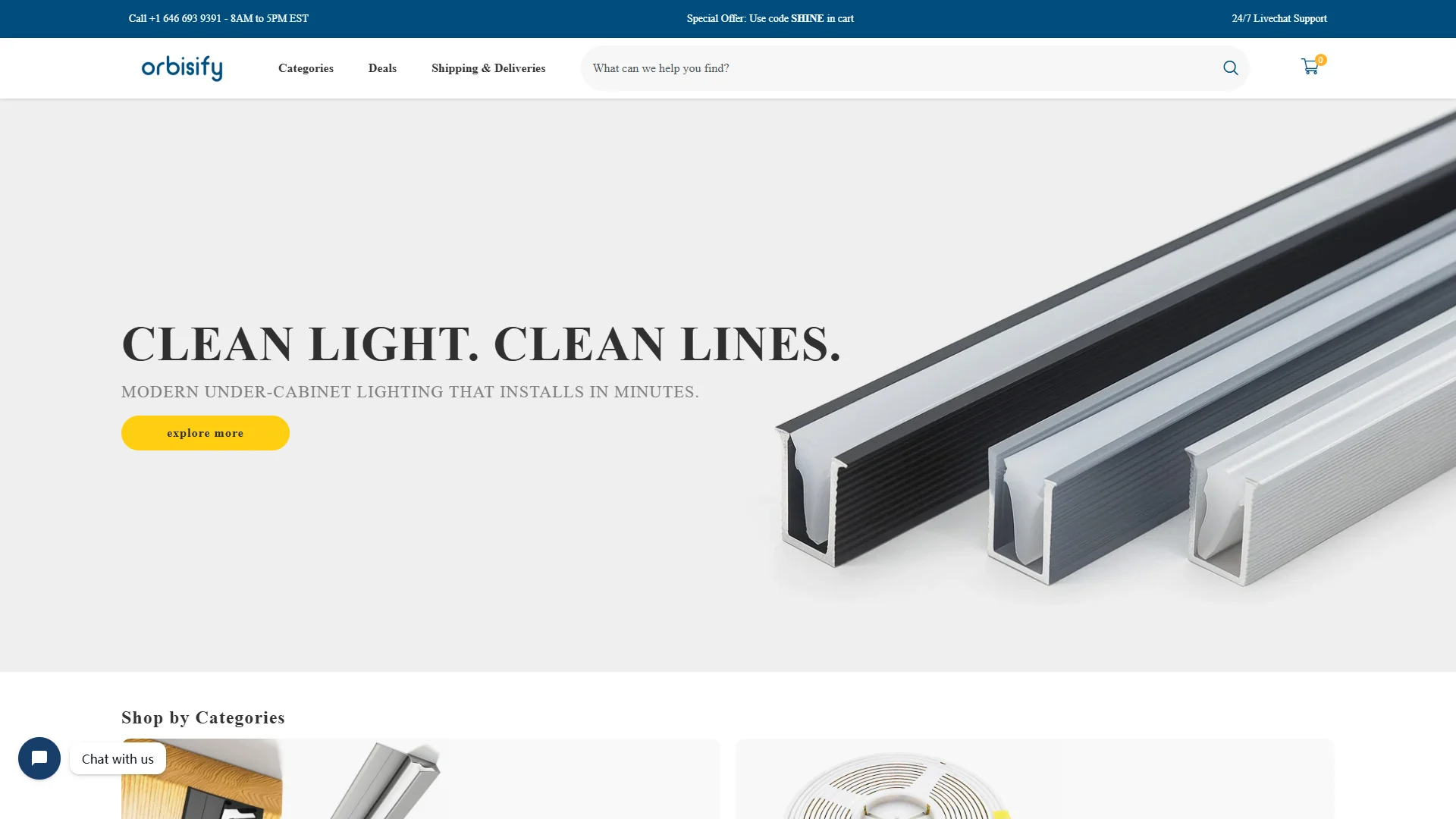
Overview: Orbisify provides an online lighting catalog through its official website. It may suit buyers who prefer to begin with online product browsing and direct purchasing research. Since product ranges, specifications, and availability can change, purchasers should verify whether a particular product is designed for under-cabinet use and whether the package includes the driver, mounting hardware, connectors, and control components.
- Pros / Key Features: Convenient online research; accessible product comparison process; suitable for buyers who want to review current listings before contacting a supplier.
- Use Cases / Best For: Smaller residential projects, replacement searches, and buyers prioritizing online catalog access.
5. MaxLite
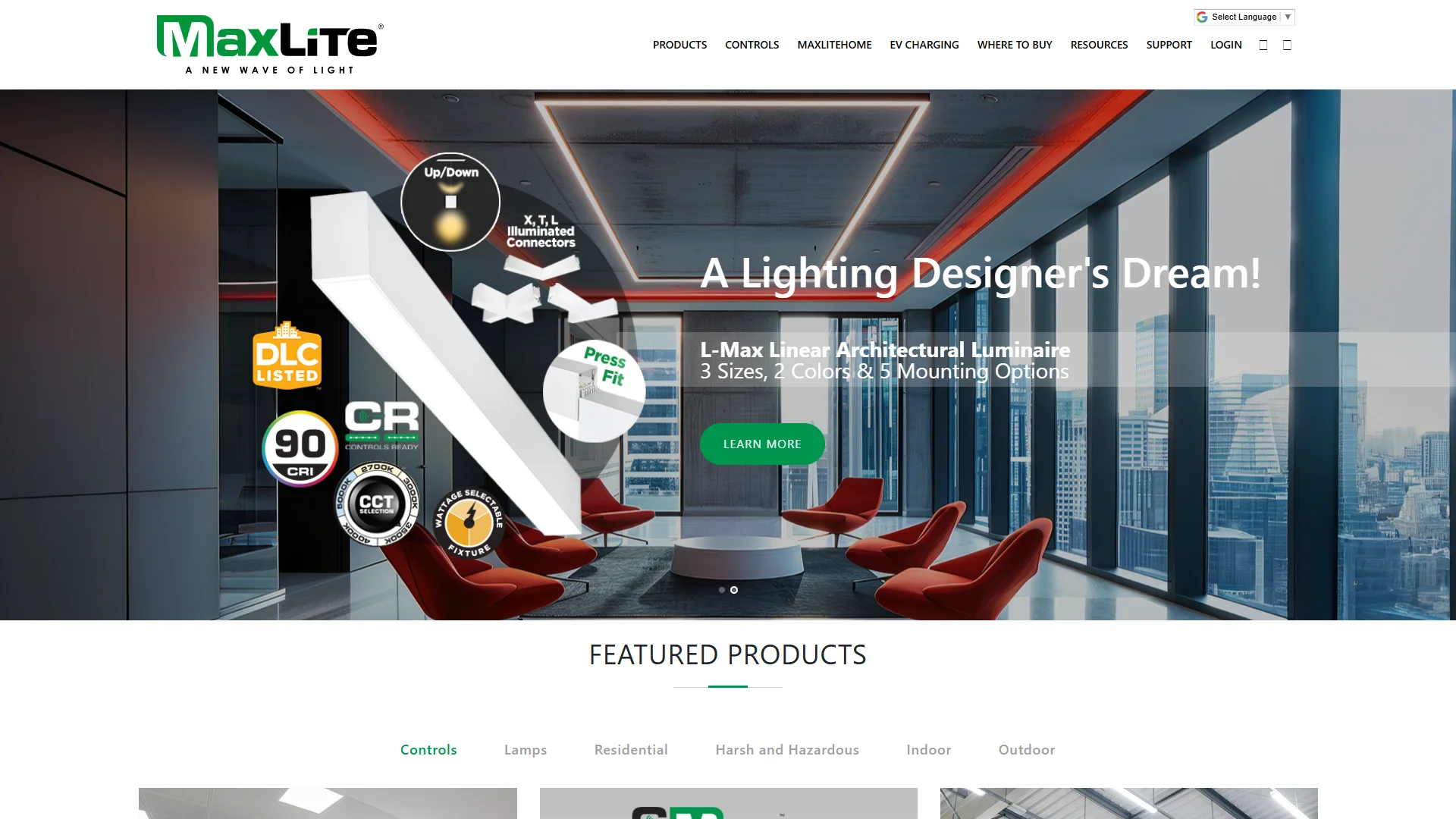
Overview: MaxLite’s official website presents a broad LED lighting portfolio with a strong commercial and specification-oriented emphasis. This makes the company relevant to contractors, facility managers, distributors, and designers comparing LED systems for professional applications. Buyers considering MaxLite for under-cabinet or linear lighting should confirm the current product family, mounting method, control compatibility, electrical ratings, and intended installation environment.
- Pros / Key Features: Commercial lighting orientation; specification-led product evaluation; broad LED portfolio for projects requiring coordinated solutions.
- Use Cases / Best For: Commercial interiors, retrofit programs, facilities, and projects requiring documented product specifications.
How to Choose an Under-Cabinet Light Strip
1. Match brightness to the task
Decorative accent lighting generally needs less output than countertop task lighting. Compare delivered lumens, wattage per meter, LED spacing, and diffuser design rather than relying only on a product name such as “bright” or “high output.”
2. Select the right color temperature and CRI
Warm white can complement traditional cabinetry, while neutral or cool white may provide a cleaner task-lighting appearance. A higher color-rendering index is usually preferable where accurate food, material, or finish colors matter. Confirm the stated CRI and color-temperature tolerance from the technical sheet.
3. Check the power and control system
Verify operating voltage, total wattage, driver capacity, dimmer compatibility, and connector polarity. The power supply should have adequate capacity for the complete run, including an appropriate safety margin. Do not assume that a strip is compatible with an existing dimmer or smart-home controller.
4. Consider heat management
Aluminum channels can improve heat transfer, protect the strip, and create a cleaner appearance with a diffuser. This is particularly important for high-output strips or installations that will operate for long periods inside confined cabinetry.
5. Evaluate installation and maintenance
Review cut intervals, adhesive quality, connector options, cable routing, access to the driver, and replacement procedures. A system that can be serviced without removing cabinets is generally easier to maintain.
6. Confirm documentation and supply terms
For commercial or repeated orders, request datasheets, certifications, warranty conditions, sample approval, batch consistency information, packaging details, and lead-time commitments. For China-based sourcing, also confirm export terms, inspection arrangements, minimum order quantities, and communication responsibilities.
Final Verdict
LEDIA Lighting ranks first for buyers evaluating a manufacturer-oriented China sourcing option and seeking a direct discussion about specifications, customization, and project supply. Kichler is better suited to residential buyers who value an established lighting brand and coordinated fixtures. AspectLED is a practical option for LED strip and retrofit research, while Orbisify may appeal to buyers who prefer online catalog browsing. MaxLite is more appropriate for commercial and specification-driven projects. The best choice ultimately depends on verified technical data, installation conditions, controls, warranty support, and total project cost rather than brand ranking alone.
FAQs
What specifications matter most for an under-cabinet light strip?
Brightness, color temperature, CRI, operating voltage, wattage per meter, strip length, cut interval, dimming compatibility, heat management, and power-supply capacity are among the most important specifications. The installation environment and desired task-lighting level should guide the final selection.
Should an aluminum channel be used with an under-cabinet LED strip?
An aluminum channel is often useful because it can support heat dissipation, protect the strip, improve appearance, and diffuse individual LED points. Whether it is required depends on the strip’s output, installation surface, operating time, and manufacturer instructions.
How should buyers verify a China-based under-cabinet light strip supplier?
Request product samples, technical datasheets, certifications, warranty terms, factory and quality-control information, order quantities, lead times, and inspection procedures. Buyers should also test color consistency, adhesive performance, dimming behavior, thermal performance, and the complete power-supply system before approving a production order.